
Seward AK Fishing Charters

What You Catch in Seward

The fish a Seward charter targets — halibut and silver salmon — plus the lingcod rule that closes Resurrection Bay year-round.

What fish do Seward charters target?

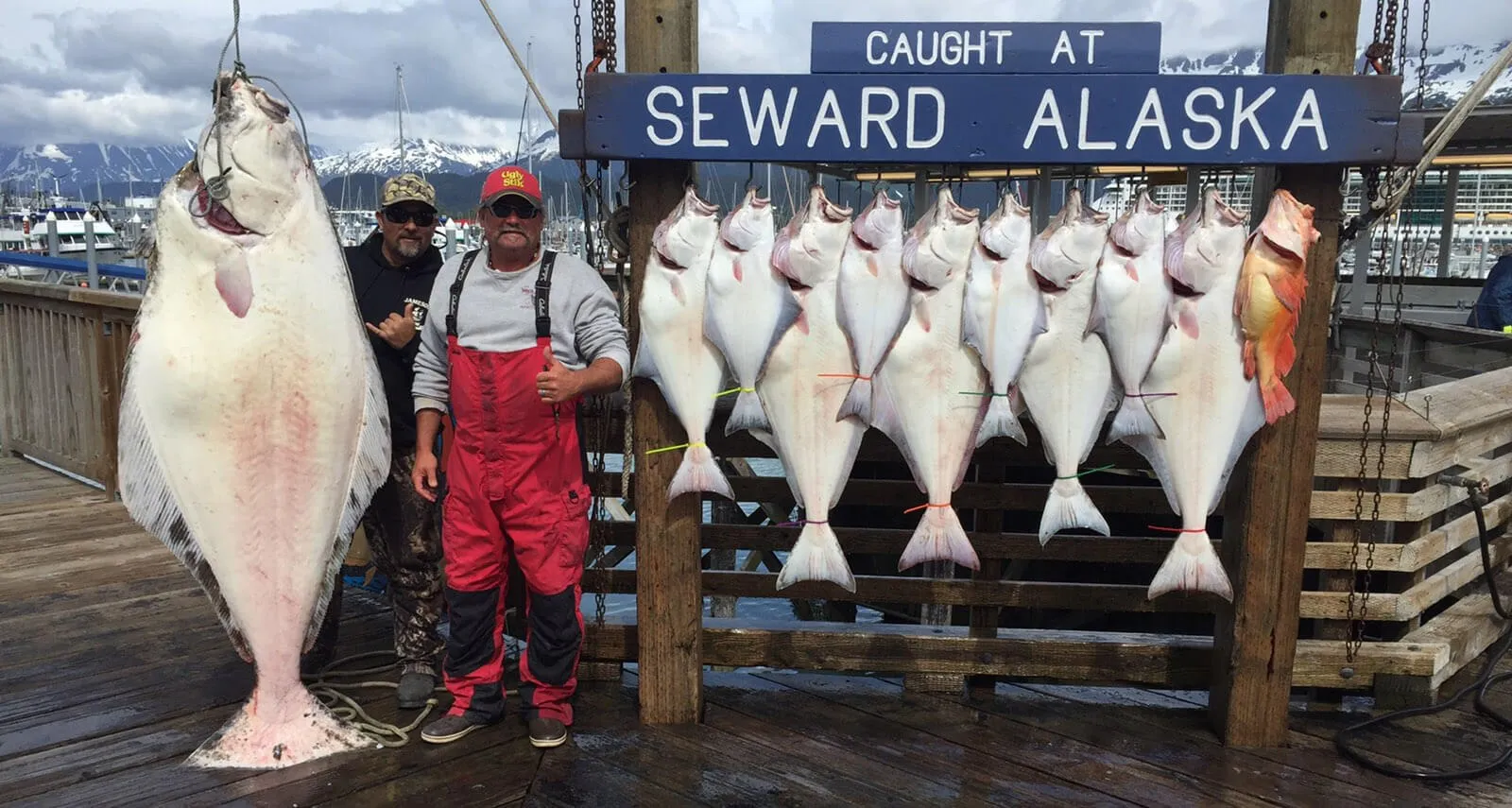
Pacific halibut and silver salmon. Halibut leads — every operator scanned names it — and silvers are a real second trip rather than a bycatch. Rockfish come up alongside. Lingcod is closed inside Resurrection Bay all year and must be released.

Halibut leads, but it is not the only trip

That is the honest summary, and it is the thing that separates Seward from the halibut towns further west. Almost every operator scanned here names halibut, almost as many also sell silver salmon, and several sell a combination trip that the crews will tell you compromises on each.

Everything else on this page is what else happens to come up while you are doing that.

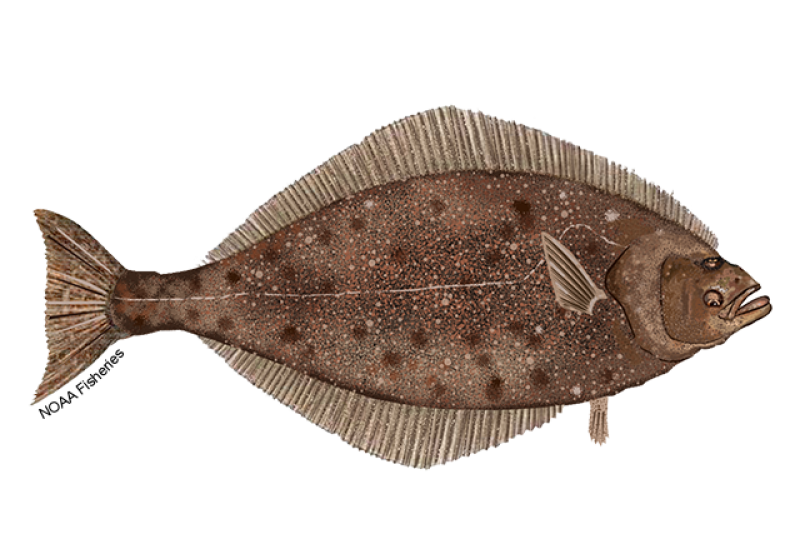
Illustration of a pacific halibut, side view

Pacific halibut

Hippoglossus stenolepis

Also known as Halibut, Alaskan halibut

The reason most of the boats go out. A very large flatfish that lives on the bottom, and the fish every operator scanned in Seward names.

Weight
Up to 500 pounds NOAA Fisheries
Length
Up to 8 feet NOAA Fisheries
Lifespan
Up to 55 years NOAA Fisheries
Range
Alaska and the West Coast NOAA Fisheries
  • The largest flatfish in its family.
  • Virtually all halibut are right-eyed — both eyes sit on the upper, dark side of the body.
  • The left eye migrates to the right side of the head when the larva is about an inch long.
  • The upper side is grey to brown or nearly black, mottled and spotted, which hides it against a sandy or muddy bottom.
  • They feed on plankton in their first year. Larger fish eat herring, sand lance, capelin, smelt, pollock, sablefish, cod and rockfish.
  • Most spawn between November and March, at depths of 300 to 1,500 feet.

Rules set by IPHC (international, federal implementation)

Biology sourced from Alaska Department of Fish and Game. Regulation is not published here.
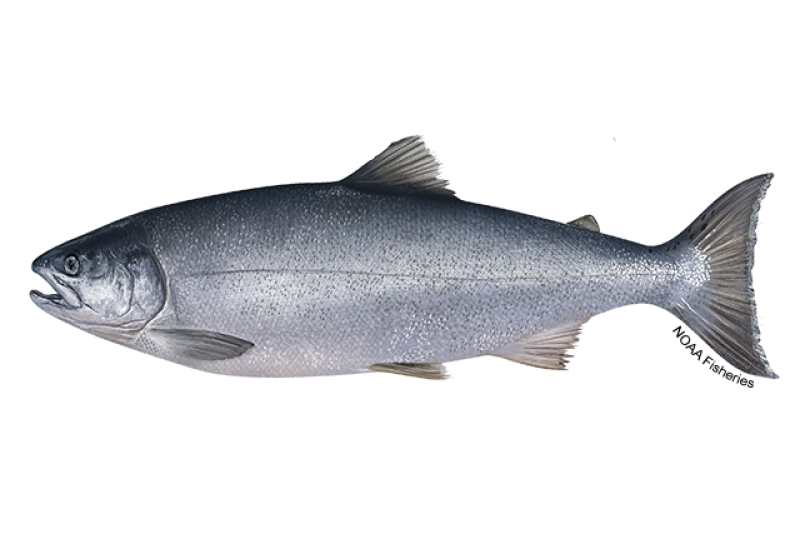
Illustration of a silver (coho) salmon, side view

Silver (coho) salmon

Oncorhynchus kisutch

Also known as Silver salmon, Medium red salmon, White salmon

The second trip out of Seward, and the one that separates this town from the halibut ports further west. Fished closer in on lighter tackle than the halibut grounds.

Weight
8 to 12 pounds; 31 pounds landed ADF&G
Length
24 to 30 inches ADF&G
At sea
About 18 months before returning ADF&G
Range
Alaska and the West Coast NOAA Fisheries
  • Adults usually weigh 8 to 12 pounds and run 24 to 30 inches, though fish of 31 pounds have been landed.
  • Most spend 18 months at sea before returning as full-size adults. Some males come back after only six months, at about 12 inches.
  • They spend one to three winters in streams, and may spend up to five winters in lakes, before going to sea as smolt.
  • At sea they eat mainly fish and squid.
  • They enter spawning streams from July to November, usually on high runoff.
  • They can be told from Chinook by the lack of black spots on the lower lobe of the tail, and by their white gums — a Chinook has spots on both lobes and black gums.

Rules set by Alaska (ADF&G)

Biology sourced from Alaska Department of Fish and Game. Regulation is not published here.
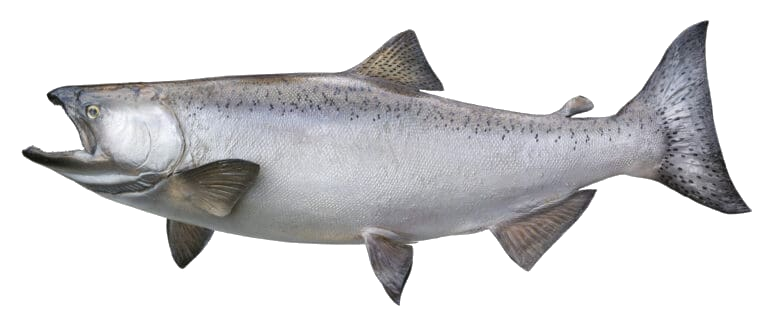
Illustration of a king (chinook) salmon, side view

King (Chinook) salmon

Oncorhynchus tshawytscha

Also known as King salmon, Spring salmon, Tyee, Quinnat, Blackmouth

The biggest of the Pacific salmon, and a bycatch or combination-trip target here rather than the main event.

Weight
About 30 pounds; record 126 pounds ADF&G
Length
About 36 inches; record 58 inches ADF&G
Lifespan
3 to 7 years ADF&G
Range
Alaska and the West Coast NOAA Fisheries
  • The largest of all Pacific salmon.
  • Age drives size sharply: a mature three-year-old will probably weigh under 4 pounds, while a mature seven-year-old may exceed 50.
  • They grow fast at sea and often double their weight in a single summer.
  • In the ocean they eat herring, pilchard, sandlance, squid and crustaceans.

Rules set by Alaska (ADF&G)

Biology sourced from Alaska Department of Fish and Game. Regulation is not published here.

Species artwork courtesy of NOAA Fisheries. They show typical form, and individual fish vary. None is a photograph of a fish caught on a Seward charter.

Is Seward good for salmon?

For silver salmon, genuinely yes, and that is worth saying plainly because the halibut ports further west are not. Most operators scanned here sell silvers, and they are fished closer in on lighter tackle than the halibut grounds outside the bay.

What the search demand says is a different thing, and both are true at once. People searching Seward still ask about halibut roughly nineteen times more often than salmon. The fishery is strong; the expectation arriving with visitors is halibut.

So say which one you want when you book. The mismatch here is not turning up in the wrong town — it is turning up for the wrong one of the two days this town sells.

Two fish in one box, two different regulators

This surprises people, and it has practical consequences. Pacific halibut is not managed by Alaska. It is set internationally by the IPHC and implemented federally. Charter anglers fish under different rules from private boats.

Salmon, rockfish and lingcod are state-managed. So one fish box can hold two species answering to two authorities. Two sets of limits, two schedules.

Your crew know this and sort it at the rail. It matters to you only when you read the rules yourself. In that case, read the right ones.

The two regulators, in their own words

Halibut is set internationally and implemented federally. Salmon, rockfish and lingcod are Alaska's. These are the current tables for each.

What is not on this page yet

Rockfish, lingcod and silver salmon all come over the rail here. They are named without biology on purpose. No agency page for them has been fetched and verified for this site yet.

That is a gap, and it is marked as one rather than filled in from memory. Guessing a fish’s diet is how a guide becomes unreliable.

  • Rockfish — named, not yet sourced
  • Lingcod — named, not yet sourced

Species questions

What fish do you catch in Seward, Alaska?

Pacific halibut and silver salmon, and they are two different trips rather than one. Nearly every operator scanned here names both. Rockfish come up on the same trips. Lingcod is closed inside Resurrection Bay year-round.

Is Seward good for salmon fishing?

For silver salmon, yes — most operators scanned here sell it, and it is a genuine second fishery rather than a bycatch. Halibut is still what most people arrive asking about, so say which you want when you book instead of assuming the boat knows.

How big do Pacific halibut get?

Large. Alaska’s Department of Fish and Game describes Pacific halibut as the largest flatfish in its family. This site publishes no typical catch weight, because that varies by ground, season and boat, and any figure would be a guess dressed as data.

Why do halibut have both eyes on one side?

Because they start life like a normal fish and change. The left eye migrates to the right side of the head when the larva is about an inch long, and the fish then lives flat on the bottom with both eyes facing up. Virtually all Pacific halibut are right-eyed.

Who sets the limits for each species?

It depends on the fish, and this catches people out. Halibut is managed internationally by the IPHC and implemented federally. Salmon, rockfish and lingcod are managed by Alaska. Two fish in the same box can answer to two different regulators.

Next step

Looking for fishing charters in Seward, Alaska?

Seward AK Fishing Charters is an independent guide — no boats, no bookings, nothing to sell. It exists so you can ask better questions before you hand an operator a deposit.

Seward AK Fishing Charters takes no bookings and earns nothing from a click. You book with the operator directly.